Preparation Strategy
Starting Early: Ultimate UPSC Preparation Guide for College Students.
Starting Early: Ultimate UPSC Preparation Guide for College Students.
If you’re still in your degree program and already thinking about the civil services exam, you’re asking the right question at the right time. Can you actually manage UPSC preparation in college, or is it smarter to wait until after graduation? We get this question constantly at Bariar’s IAS, and honestly, the answer isn’t as complicated as most people make it sound. Starting UPSC preparation in college gives you something no test series or crash course can replicate: time. Lots of students delay UPSC preparation in college because they assume they’ll “focus better” later. In our experience, later rarely comes with more free time. It comes with job pressure, family expectations, and less energy, not more.
Why Starting UPSC Preparation in College Gives You an Edge
Think about your college timetable for a second. Compared to a working professional’s 9-to-6, you have far more control over your hours. That’s the real edge.
A few concrete advantages we see in students who start early:
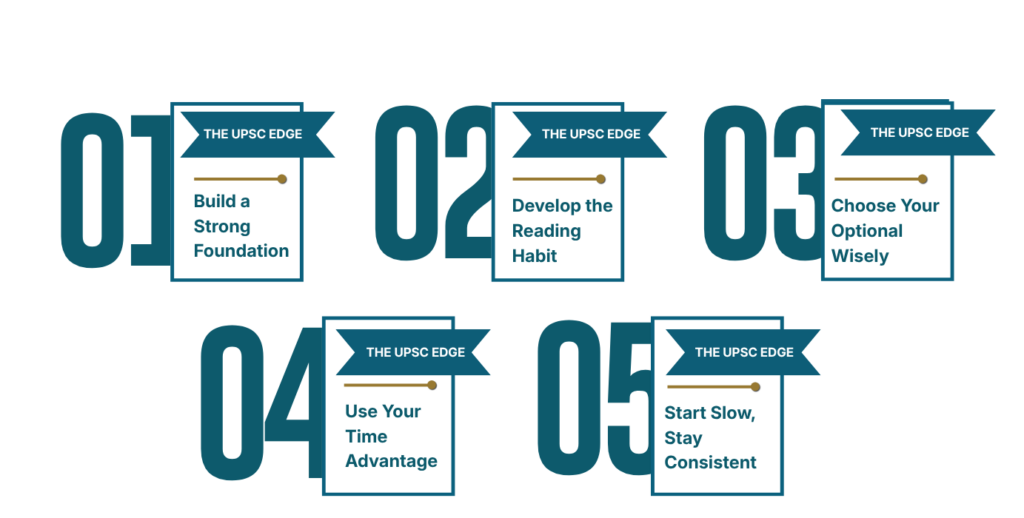
- NCERT foundation overlaps with your coursework.
If you’re in a humanities or even a general BA program, a good chunk of your syllabus already touches history, polity, and economy.
- You build the reading habit before it becomes urgent.
Reading The Hindu or a similar daily source for two years feels very different from cramming current affairs in six months.
- Optionals become easier to pick.
You’ve already sampled subjects across semesters, so choosing an optional subject isn’t a shot in the dark.
That said, starting early only helps if you’re consistent. We’ve seen students burn out by December of first year because they tried to do 10 hours a day alongside attendance requirements. Slow and steady genuinely wins this one.
Can Students Do UPSC Preparation With College?
Short answer: yes, but it depends on your college’s attendance rules and how demanding your specific course is. Engineering and medical students have a harder time than arts or commerce students, purely because of lab hours and practicals.
Here’s what actually works for most students juggling both:
- Treat weekday evenings as “foundation time” NCERTs, static GS, basic newspaper reading.
- Save weekends for answer writing practice and current affairs consolidation.
- Use semester breaks aggressively. Two months of focused prep during summer break can cover an entire optional subject’s basics.
We’d be lying if we said it’s easy. It’s not. But thousands of successful candidates, including several we’ve mentored, cracked the prelims and mains while still attending college. It’s a matter of protecting your time, not finding more of it.
Which College Is Best for UPSC Preparation?
There’s no single “best” college for UPSC preparation, and be wary of anyone who tells you otherwise. What matters more than the college’s name is:
- Whether it gives you flexibility with attendance
- Access to a decent library (even a basic one helps with static portions)
- A campus culture that doesn’t treat “I’m preparing for UPSC” as unusual
Delhi University colleges, JNU, and a handful of state universities have a reputation for producing UPSC aspirants simply because the ecosystem around them bookstores, coaching hubs, peer groups is built for it. But we’ve mentored toppers from smaller towns and lesser-known colleges too. Your college matters less than your discipline.
UPSC Preparation College Fees
This is where a lot of students get caught off guard. UPSC preparation isn’t free, and the costs stack up quietly if you don’t plan for them.
Here’s what our own course fees at Bariar’s IAS look like, so you have real numbers to plan around instead of guessing:
| Caurse | Fee |
| GS Foundation [offline] | 1,35,500 |
| GS Foundation [Online] | 80,500 |
| The Grind | 35,000 |
| CSAT | 18,500 |
| Optional Subject | 40,500 |
You don’t need to enroll in all of these at once. A lot of college students start with GS Foundation Online since it fits around a class schedule better than the offline batch, then add CSAT or an optional subject closer to when they actually need it. If you’re still deciding between offline and online, or want to know what’s included in each, our team can walk you through it you can reach out here.
Building a Study Plan Around Your College Schedule
A study plan that ignores your actual college hours will fail within a month. We’ve watched it happen too many times.
Here’s a structure that tends to hold up:
- Weekdays: 2–3 focused hours after classes, split between NCERTs/static GS and newspaper reading
- Weekends: 4–5 hours for answer writing and revision
- Semester breaks: Full-day study blocks, ideally used for optional subject depth or mock test cycles
- Exam weeks: Pause UPSC prep entirely. Don’t try to do both at full intensity; you’ll do neither well.
The goal isn’t maximum hours. It’s consistency you can sustain for two to three years without hating the process by year two.
Common Mistakes College Students Make When Starting Early
We see the same patterns repeat every batch:
- Starting too many resources at once. One standard book per subject beats five overlapping ones.
- Skipping answer writing until final year. By then, it’s a completely new skill you’re learning under time pressure.
- Ignoring optional subject selection until it’s urgent. Pick it in the first or second year, not right before mains.
- Treating coaching as a substitute for self-study. Coaching supplements your prep; it doesn’t replace the reading and revision you have to do yourself.
- Comparing your pace to droppers or repeaters. Someone who’s out of college and studying 10 hours a day is not your benchmark. Compare your progress to your own timeline.
Conclusion
UPSC preparation in college is absolutely doable, and in many ways, it’s the smarter time to start. You get years instead of months, a lower-pressure environment to build habits, and the chance to make mistakes early when the stakes are lower. The students who do this well aren’t the ones with the most hours, they’re the ones who stay consistent.
If you’re not sure where to begin, we’d suggest starting with a diagnostic conversation about your college schedule, your target optional, and a realistic timeline. That’s exactly what we help students figure out at Bariar’s IAS, whether you’re in first year or already halfway through your degree.